
Furnaces That Work When You Need Heat
Heating repair in Las Vegas for furnaces that fail to ignite, cycle off mid-run, or blow cold air through the vents
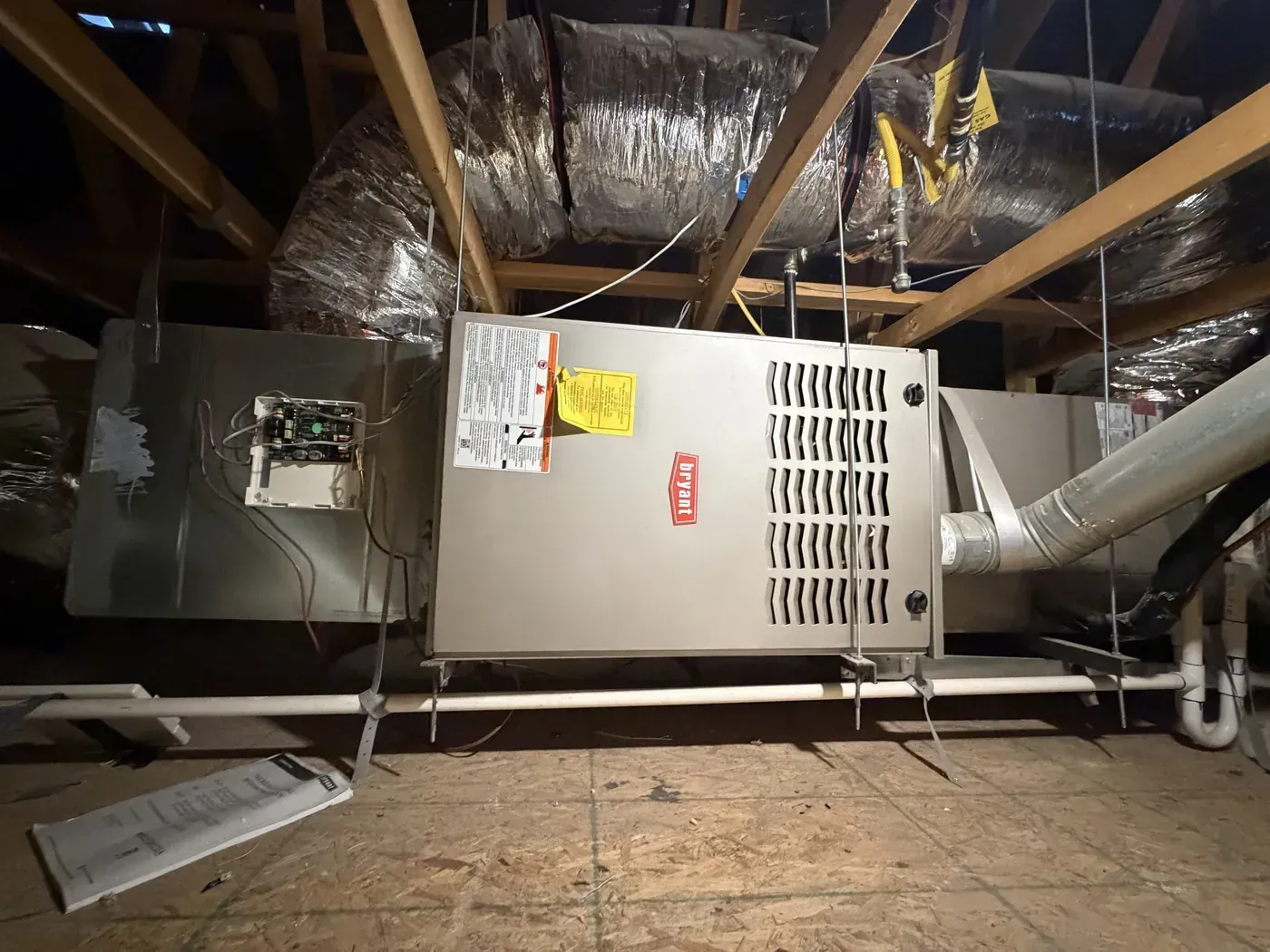
Many valley homes place gas furnaces on platforms in the attic, where access and clearance affect how a repair is carried out. Volt N' Vent repairs heating systems for homes and light commercial properties across the Las Vegas Valley, including furnaces in attic installations. Because HVAC and electrical work are done by one team, a heating fault that involves wiring is resolved without handing it to another company.
The technician checks the furnace, its controls and its electrical connections, then explains what has failed and the options to fix it. A flat-rate price is given after a free estimate, before any repair starts. Same-day appointments are possible when a furnace fails overnight or during a cold snap.
Schedule a property evaluation to identify the specific fault affecting your heating system.
What Happens After the Furnace Is Repaired
Once the faulty component is replaced or the wiring fault is corrected, the furnace is tested through a full cycle to confirm ignition, flame stability, and temperature rise across the heat exchanger. The technician verifies that the blower delivers air at the expected volume and that the thermostat calls for heat without delay.
You will notice that the system ignites on the first call, cycles at the interval the thermostat demands, and delivers warm air through every register connected to that furnace. Rooms that were slow to warm or stayed cold during the fault will reach the set temperature, and the burner will shut down cleanly when the call ends.
The repair includes the component that failed and the labor to install it, but does not include duct sealing, filter upgrades, or full system replacements unless those are discussed and quoted separately. If the furnace is older than fifteen years and requires a second major component within the same season, replacement rather than continued repair is often the more reliable path.
Answers About How the Work Is Done
Heating repairs across the valley raise questions about access, safety, and how to know the problem is actually solved. The following answers address what happens during the visit and what you can expect once the work is finished.
What does the technician check first on a furnace that will not ignite?
The technician confirms that the thermostat is calling for heat, that gas is flowing to the valve, and that the igniter or pilot is receiving power. If the igniter glows but the burner does not light, the gas valve or flame sensor is the next point of inspection.
How is a furnace repaired when it is installed in an attic?
The technician climbs into the attic, moves insulation as needed to access the platform, and works from that space. Attic installations in North Las Vegas and Henderson often place the furnace close to roof joists, so some repairs require partial disassembly of the blower cabinet to reach internal components.
Why does a heating repair sometimes involve electrical work?
A furnace relies on power to run the blower, igniter, and control board. If a circuit breaker trips repeatedly, a wire shows damage, or the control board has burned contacts, the electrical fault must be corrected before the furnace will operate reliably.
What should you notice immediately after the repair is complete?
The furnace should ignite within seconds of the thermostat calling for heat, the blower should start smoothly without grinding or rattling, and warm air should reach the registers within two minutes of ignition. If any of those steps fail, the repair is not complete.
How long does a repaired furnace component typically last?
A replaced igniter usually lasts three to five years, a new blower motor often runs ten years or more, and a control board depends on voltage stability and how often the system cycles. Regular filter changes and annual cleaning extend the life of every repaired component.
Volt N' Vent also performs heating repair in Henderson, North Las Vegas, Boulder City, Mesquite and Pahrump. Licensed under Nevada C-21B HVAC license and C-2 electrical license, the company handles both the mechanical and electrical sides of a heating fault on the same visit, so you do not wait for a second crew to finish what the first one started.